

Written by :
Published on :
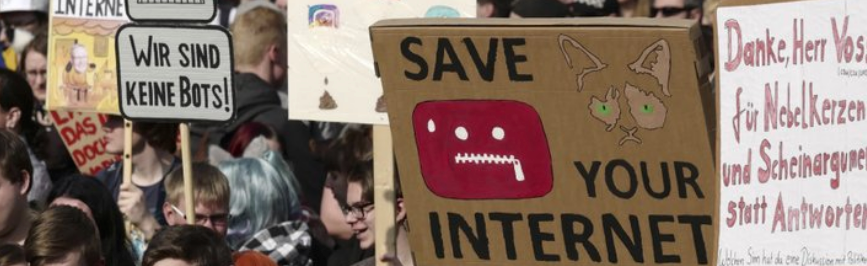
LONDON (AP) — The European Union on Monday approved a copyright overhaul aiming to protect artists, news organizations and photographers and punish smaller web companies that might publish said content without permission. A final vote on the directive known as Article 13 will take place in May.

START YOUR OWN SPORTSBOOK FOR JUST A SMALL WEEKLY FEE PER PLAYER HERE
Easier said than done as many small and medium sized Web companies, including online gambling affiliate outlets, publish photos found on the Net including via Google and Bing images. While they may cease doing so with such a broad directive, it is close to impossible to go back over past years and check thousands of pages worth of content (some of which may be difficult to edit) that could feature otherwise copyright content.
Artists, celebrities and tech experts have spoken out both in favor and against the EU directive, which the 28 member states are required to adopt as law and got final approval from the European Council Monday. A petition against Article 13 has attracted more signatures than any other petition in European history and is on track to be the most popular petition in the history of the human race within a matter of days.
From the Associated Press:
The most vigorously debated part of the legislation is a section that makes companies responsible for making sure that copyrighted material isn’t uploaded to their platforms without permission from the original creator. It puts the legal onus on platforms to prevent copyright infringement but critics say it will end up having a chilling effect on freedom of expression on the internet and could result in censorship.
Another section of the bill that caused concern requires search engines and social media sites to pay for linking to or offering up snippets of news articles.
The effects could be chilling to website owners, affiliates included. Compliance must occur in the next three years, and failure to do so could result in steep fines. Each EU nation will have two years to draft their own laws. Six countries — Italy, Sweden, Poland, Finland, the Netherlands and Luxembourg — voted against it, so implementation is likely to be uneven, setting the stage for possible legal challenges.
That gives tech giants an edge over smaller companies. Google said last year it spent more than $100 million on Content ID, its copyright management system for approved users on YouTube, where more than 400 hours of content is uploaded every minute. The figure includes both staffing and computing resources.
Critics are crying "censorship" of the Internet.
And it's not just publishing of images. Whole videos created by Web affliates could be wiped off YouTube should they be found to contain copyright material.
Some consumers worry that the new rules would bring an end to parodies and viral internet “memes” that have powered online culture and are often based on or inspired by existing songs or movies or other content. The EU denies this.
“The new law makes everyone a loser,” said Julia Reda, a lawmaker with the Pirate Party, which campaigns for freedom of information online. “Artists, authors and small publishers will not get their fair remuneration and internet users will have to live with limited freedoms. Artistic diversity has made the Internet colorful, but unfortunately the copyright directive will make the Internet duller.”
The AP emphasized the negative reaction particularly in Germany.
Germany wants the rules to be implemented in such a way “that upload filters be averted if possible, and that user rights — freedom of opinion, about which there has been a lot of discussion here — be preserved,” government spokesman Steffen Seibert said Monday. Last month, tens of thousands of people marched in cities across Germany to protest against the directive. Poland’s leader has said his country will not implement it, arguing it threatens freedom of speech.
In a new official statement on the Directive (English translation), German Data Privacy Commissioner Ulrich Kelber warns that Article 13 will inevitably lead to the use of automated filters, because there is no imaginable way for the organisations that run online services to examine everything their users post and determine whether each message, photo, video, or audio clip is a copyright violation.
Kelber goes on to warn that this will exacerbate the already dire problem of market concentration in the tech sector, and expose Europeans to particular risk of online surveillance and manipulation.
- Gilbert Horowitz, Gambling911.com