

Written by :
Published on :
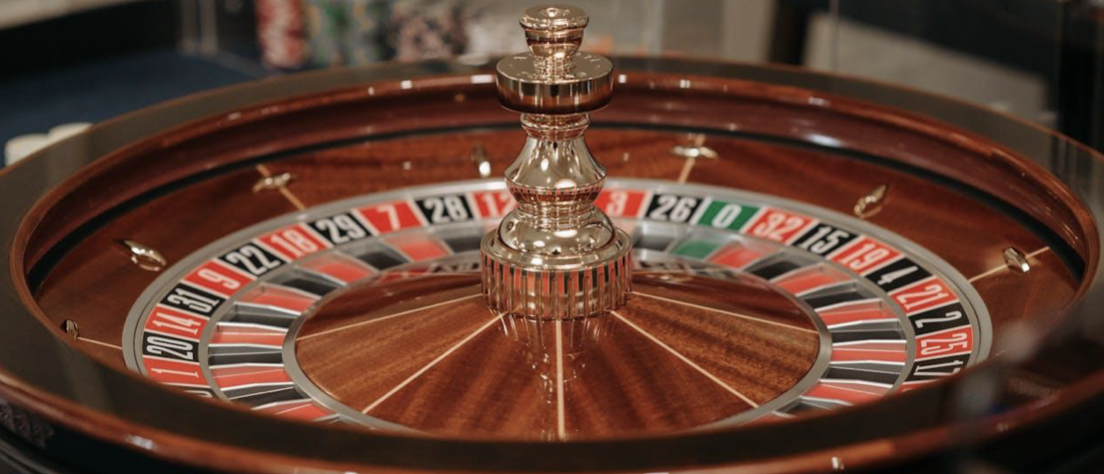
Getting a lucky streak in roulette can feel amazing and, when it happens, many people get the sensation that they somehow know what to bet on next, either because the table is sending them hints or because it is somehow listening to their choices and going along with them.
Another interesting part of this is that the feeling often gets stronger the faster results arrive, even if nothing else about the game changes. In truth, each spin of the roulette wheel is statistically independent from any other spin, and the outcomes are neither predictable nor something you can influence as an observer. What you are reacting to is not a hidden message. It is your brain trying to find meaning in a small sample of the overall results.
One thing to keep in mind is that random outcomes often clump far more than our intuition tells us they should. This is true whether the results are being generated by a physical wheel or a random number generator that is simulating the wheel’s behavior. We often feel that a given outcome is unlikely to repeat immediately. It feels odd when the same number comes up on two consecutive spins, and when we see a streak of five reds (or blacks) in a row, we start to wonder if the table is actually as random as we’ve been told.
However, if landing on red four times in a row made it less likely that the next outcome would also be red, then the spin would not actually be independent. Truly random outcomes mean clumps occur pretty frequently.
Count Runs So You Stop Guessing
Before you decide that a streak “means something,” take a moment to analyze how you are looking at the game. Has the pattern that you’ve noticed really run long enough to be statistically unusual, or have you just noticed a coincidental occurrence within the random outcomes? Watch the next ten spins or so and see if the pattern you’ve noticed holds true for all of them.
Even if it does, it’s worth keeping in mind that this has close to a 0.1% chance of happening purely thanks to luck (assuming you are making odds/evens or red/black predictions, and ignoring the green). That may sound small, but if you sit at the roulette table long enough and are prone to noticing apparent patterns, it will happen eventually.
This is also why roulette is such a good learning tool for teaching your brain about probability. Outcomes arrive fast, so the temptation to start spotting patterns can be strong. Sitting back and testing whether those patterns actually hold is a good way to counter that impulse.
To improve your understanding of randomness further, it can help to make this a more structured experiment. Join a roulette game, either a physical one or, if you don’t want the hassle of dressing up and going out, a digital version offered at an online gambling website. Whichever you choose, sit down and watch the numbers, paying attention to any patterns your brain wants you to notice. It can help to write the outcomes down to make this easier, and this is another area where a digital version can be the better choice, as they sometimes record the most recent outcomes for you.
Once you’ve spotted a streak, start counting how long it lasts before a result that breaks it comes up. This is where writing things down is helpful. We tend to remember patterns that struck us as unusual for longer and give more weight to them than to the times a pattern broke. Recording the point where you noticed a streak and how long it lasted before coming to an end helps avoid this bias.
The Law of Small Numbers
The law of small numbers is when we treat a tiny sample as if it should resemble the full picture. If you flip a coin ten times, people expect a roughly even split. If they see eight heads and only two tails, then they may assume that the coin is biased and that this same ratio might be expected if the coin was flipped a hundred times instead.
This is why clusters feel meaningful. A cluster is not an indication of how a random system will behave if run indefinitely. It’s just a small wobble in the larger picture. Of course, roulette adds another twist that coin tosses don’t have. Even if you focus only on red and black, the presence of green means the sequence will not behave like a perfect coin.
Summary
Once you start tracking the actual outcomes of a game, you’ll likely notice that, while patterns and streaks show up more frequently than your intuition may suggest, they often end just as abruptly. The next time you feel a streak pulling your attention, keep in mind that these are to be expected in random games, and don’t give too much weight to it.
- B.E. Delmer, Gambling911.com