

Written by :
Published on :
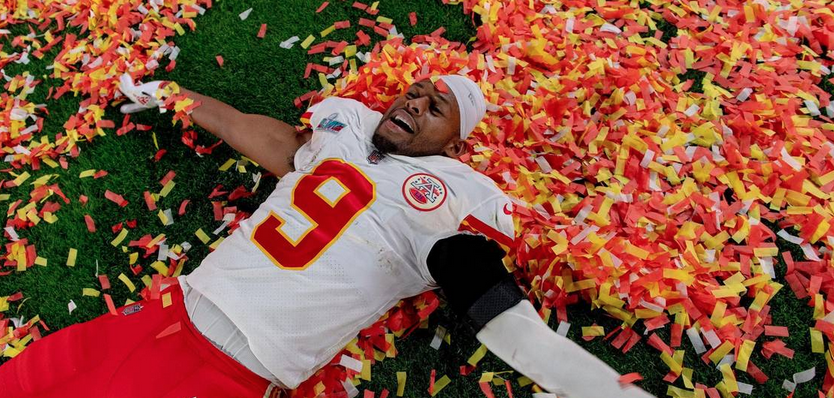
In an excellent report filed by Marco Schaden of the Wichita Beacon, it was revealed that the state of Kansas received a mere $1,134 from sports betting during the month of February. That's when the Super Bowl took place and the state's beloved Chiefs won the Super Bowl.

Okay, we get it. The Chiefs play in neighboring Missouri, home to Kansas City. But a good chunk of suburban KC is located in the great state of Kansas (Overland and that other Kansas City). You'll find a similar situation with the Washington Commanders, both New York teams (they play in New Jersey) and the New England Patriots.
Kansas, unlike Missouri, has legalized and regulates sports gambling.
And the Sunflower State benefited bigly. It took in $194 million the month of February alone from sports wagering.
So what on Earth happened here?
As Schaden explains, Kansas’ law legalizing sports betting allows sportsbook companies to deduct the cost of promotional free bets before reporting revenues. This essentially allows these companies to advertise their product for free.
“Is criminal too strong a word?” asked Stephenie Roberts, a Wichita social worker and gambling addiction counselor, when approached about this story by the Beacon. “I call that get-into-debt money instead of free-play money,” she added.
Kansas is not alone when it comes to this type of quirk. Nearly half of sports betting revenue goes untaxed in three other states.
Pennsylvania, Colorado, Michigan, like Kansas, all allow online gambling companies to carve out any earnings tied to free play from their taxable revenue.
"Lawmakers aren’t paying attention to this yet, but it’s coming,” Brandon Loeschner, chair of the gaming group at RubinBrown, told Bloomberg News back in 2021.
Virginia lawmakers caught on last year. They passed a budget amendment prohibiting sports betting operators “from excluding bonuses or promotions used to encourage betting from their adjusted gross revenue 12 months after they begin sports betting activity in Virginia.”
Oddly enough, some legislators have recently begun pushing to reinstate the promotional tax deductions in some capacity. Not surprisingly, all of the sportsbook operators are in favor of such legislation.
The bill, SB 1142 failed, primarily a result of Virginia's legislative period ending in February, a few days after it was introduced.
Gov. Laura Kelly’s office issued a statement via Brianna Johnson, her communications director, after the Wichita Beacon story was published: “Governor Kelly agrees there are aspects of the sports betting legislation that could be improved. She will continue to discuss any potential changes with legislators.”
The Wichita Beacon approached six of the state's licensed sportsbooks for comment. Only one, DraftKings, responded, but after the story went to press.
- Gilbert Horowitz, Gambling911.com