

Written by :
Published on :

Virtual reality has already transformed industries like gaming, retail, and education, but one of the most closely watched developments is its impact on online gambling. Platforms such as Vegastars are part of a growing wave of casino brands exploring more immersive experiences as players increasingly seek social interaction, realism, and entertainment beyond traditional online casino platforms.
While VR gambling technology has advanced rapidly over the past few years, traditional online casinos still dominate the market due to accessibility, mobile portability, and recent innovations that add more realism to game play such as the live casino collection exhibited on Vegastars.
However, the gap between the two formats is narrowing. With technology constantly making progressive strides, new experiences are being created that bring digital entertainment closer to the real world. For online gambling, the next big step could be the unveiling of a new dimension for game play.
When commenting on the future of iGaming, Professor Alexei Dingli, a global expert in Artificial Intelligence (AI), said to SiGMA News the following.
“We realise the future is here, and it is virtual.”
- Professor Alexei Dingli, Global Expert in AI Technology
Succinct and simple, but an accurate summary of how experts see the potential of VR technology in iGaming. And when aligned with research conducted by Fortune Business Insights, that forecasts a global virtual reality market size of just over $26 billion, a near $6 billion increase on 2025, there is reason to believe that VR casinos could replace traditional online casinos. But perhaps not quite yet.
What are VR Casinos?
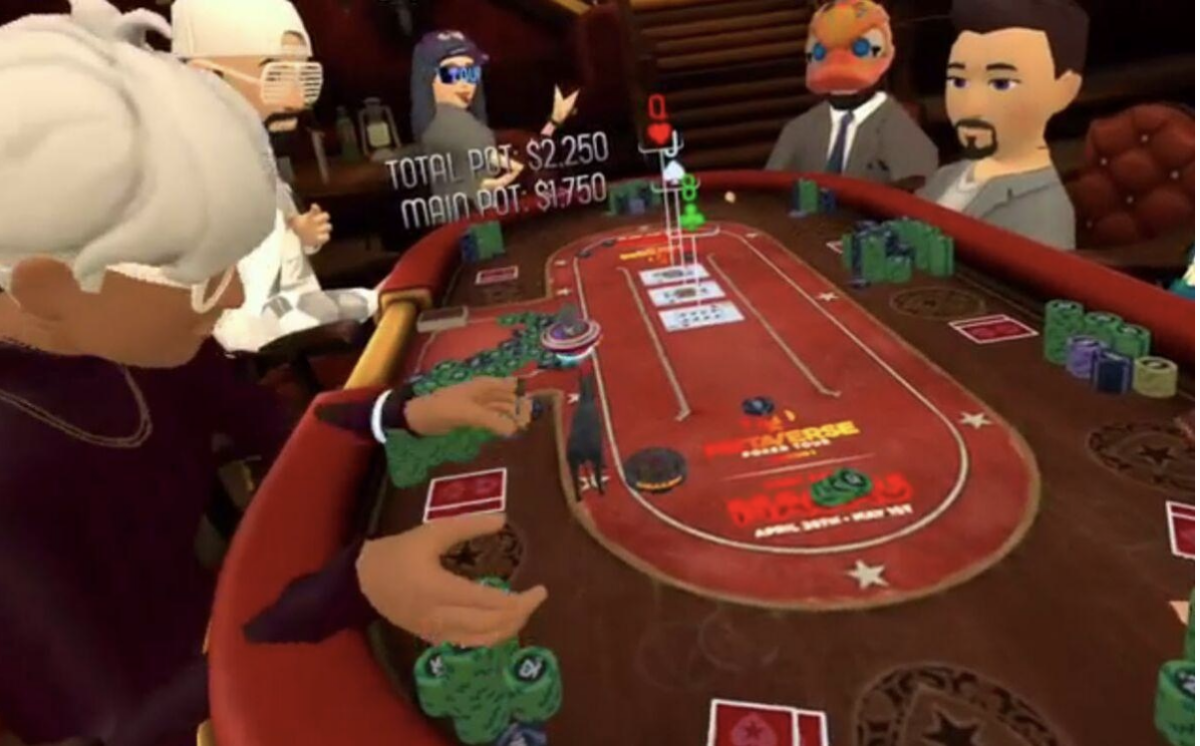
Firstly, it is important to establish what exactly a Virtual Reality (VR) casino is. While online casino enthusiasts and users of Vegastars will be accustomed to traditional online casinos, the VR environment creates a whole new experience. The levels of immersion and interaction are ramped up to replicate lifelike actions. Much like those performed in a land-based casino.
There are striking differences to traditional online casinos in the striking visuals and the levels of engagement with features programmed into the 3D VR environment and virtual gaming floor. The usual casino classics such as blackjack, roulette, slots, and poker can be found on the VR casino titles that are currently available like Social Club VR: Casino Nights, PokerStars – Vegas Infinite, and Video Poker VR.
Headsets and VR technology allow players to wander across virtual gaming floors as their digital avatar and physically interact with casino props such as cards at a poker table or place chips at roulette. The fully interactive element is capped off by the promotion of social interaction with communication channels that allow VR players to face other avatars and players and engage in conversation.
What is the Latest Innovation at Traditional Online Casinos?
With all the talk about VR technology being integrated into online casino play, it is worth reminding readers of the latest innovation to redraw the online casino landscape and bring more realistic elements to game play. On the Vegastars platform, a dedicated live casino section highlights the most recent release to alter the gaming experience.
The section that hosts a range of games such as blackjack, roulette, poker, as well as live game show games, introduces a hybrid form of game play that involves the employment of real person dealers and presenters to moderate game play in remote locations. This is all transmitted to players wherever they are through the use of state-of-the-art cameras and broadcasting technology.
The main advantage created by online casino play is the matching of digital convenience with real life interactive elements such as dialogue with dealers and other players. While the interactive aspects teased by VR intervention such as the physical handling of cards is not possible in live casino play, operators such as Vegastars have taken the next step in creating the most immersive experience by connecting game play with real world elements.
Advantages of VR Casinos
When it comes to assessing the potential impact of VR Casinos, there are many advantages introduced in the creation of a new dimension of game play. We touched on it earlier, but the heightened level of interaction is what will set VR gaming apart from traditional online casino game play found on Vegastars.
Whether on a social or game play level, a new range of movements and actions to engage with add a whole pallet of sensory elements to take in. The sounds of an electrified casino floor witnessed in land-based casinos are replicated digitally to bring players full circle to real life experiences. And perhaps the ultimate benefit. The ability to access this dimension from the comfort of home.
VR Casinos are expected to build on the levels of convenience created by online casino game play on the entire range of digital devices and supplement it with more immersion.
Potential Challenges for VR Casinos
While online casino players can rightfully get excited about the prospect of VR game play, there are a few issues holding back the release and integration of the technology onto platforms like Vegastars. The main concern stems around the levels of motion sickness experienced from visuals in the new dimension.
Motion Sickness
According to Forbes, Mayo Clinic believe they have found a solution to VR sickness, also known as simulator sickness, that essentially “synchronises the inner ear to what a person is viewing.” Whether the technology called Galvanic Vestibular Stimulation helps reduce levels of nausea experienced by those that have tried out VR gaming remains to be seen. However, controlling the levels of motion sickness is one of the final hurdles to overcome for VR developers.
Costs
Alongside the physical discomfort, there are also concerns over the cost of the technology. Not only in the production, but in the integration of software onto a platform like Vegastars, that currently does not possess any VR capabilities. For platforms like Vegastars to accommodate VR casino games, the following criteria would need to be fulfilled:
- 3D development
- Motion systems
- VR-compatible interfaces
- Real-time multiplayer infrastructure
- Advanced cybersecurity
While developers will be capable of applying the right programming to make the technology work, the significant investment required is what concerns online casino providers most. For players, they would also have to invest in a headset, which are significantly more expensive than a PlayStation controller for example.
Finally, regulatory standards are another potential hurdle for tech developers and operators to overcome as the world attempts to get a grasp on the implications of VR technology. Much of the conversation right now revolves around device safety with legal firm, Morrison Foerster providing an overview of the regulatory landscape that industries are potentially looking at.
Regulation for traditional online casinos is growing more complex, with the topic of responsible gambling at the top of the agenda. With operators like Vegastars working hard to ensure all the regulatory requirements are fulfilled, there could be another layer to consider if the operator, licensed by the Tobique Gaming Commission and Anjouan Gaming Authority, wishes to accommodate VR game play in the future.
Responsible Gaming Notice
Nowadays, Vegastars and fellow operators are more on top of responsible gambling practices due to the growing importance of the subject within the industry and assistance from Artificial Intelligence (AI) to prevent problem gambling. Ensuring that their users are secure and safe in the virtual gaming environment has become a duty, with the following responsible gaming tools now commonly found on licensed and responsible online casino platforms:
- Self-exclusion
- Limits (deposit, spending and time)
- Cool-off periods
- Access to professional gambling addiction organisations
- Reality checks
Organisations such as Gambling Therapy and GambleAware provide support for those seeking professional help. Gambling should never be considered a form of income and losses should never be chased.
Final Thought: What Does the Future Hold for VR Casinos?
Although progress has been made in VR technology, the integration into online casino game play still finds itself in an experimental phase. There is no doubting the difference VR tech would have on the overall gaming experience. That is summed up by the following table:
VR Casinos vs Traditional Online Casinos
| Feature | VR Casino | Traditional Online Casino |
| Immersion | High | Medium |
| Accessibility | Hardware dependent | Extremely accessible |
| Social Interaction | High | Limited but improving |
| Mobile Compatibility | Low | Very high |
| Setup Complexity (Headset) | Very high | Very low |
| Cost of Development and Integration | Expensive | Low |
| Gameplay Speed | Slower | Faster |
| Market Potential | Emerging | Established |
| Final Verdict | 2 | 4 |
If the final two parameters are removed, due to neither being clearly better than the other, the table highlights a mixture of advantages and disadvantages for both VR casinos and traditional online casinos right now. The main difference is the potential of VR technology. While costs are currently much higher, the price of headsets could be reduced. But in terms of immersion and interaction, there is only one clear winner.
Traditional online casinos like Vegastars will not be able to replicate anything future VR casinos produce. Live casinos bring them close, but physical interaction on game play is beyond their capabilities. However, as the table above reflects, traditional platforms still hold the best hand, to coin a poker phrase, due to the established nature of Vegastars and the thousands of operators worldwide.
Platforms like Vegastars reflect how the industry is gradually evolving toward richer digital experiences while still maintaining the convenience users expect from traditional online gambling.
As VR hardware improves and immersive gaming becomes more mainstream, virtual casinos will almost certainly grow in popularity. However, widespread adoption will depend on affordability, regulation, responsible gaming protections, and whether players truly prefer immersion over convenience.
- Nathan Cole, Special Contributor to the Gambling911.com Website
Nathan Cole is a technology and gaming writer with over 9 years of experience covering online casinos, emerging gambling technology, and digital entertainment trends across Europe and Australia. His work focuses on player behaviour, gaming innovation, and responsible gambling practices.