

Written by :
Published on :
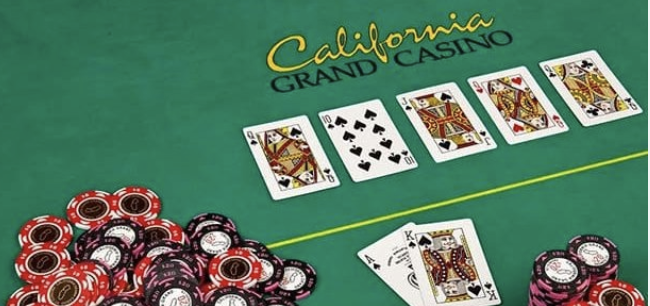
LOS ANGELES, Calif. (Gambling911.com) - Walk into the Commerce Casino on a Friday night and the room does the talking. Rows of green felt, a waitlist chalked onto a board, and a crowd that spans retirees in windbreakers to twenty-somethings staring at their phones between hands. California has more live poker under one set of laws than almost anywhere on the planet. What it does not have is a legal online version.
That gap is the story. Not the games, not the stakes, but the political machinery that keeps a state of nearly 40 million people tethered to brick-and-mortar tables.
The Rooms That Built the Scene
California's poker identity sits in its cardrooms. These are licensed card clubs, not tribal casinos, and they run on a model that has been tested in court for decades. Players do not bet against the house. They buy a seat, the house takes a rake or a time charge, and everything else is player versus player.
Commerce, just southeast of downtown Los Angeles, is the headline name. It spreads a long list of games through the week, from low-limit hold'em to high-stakes mixed games that draw pros from out of state. Up the coast, Bay 101 in San Jose built its reputation on tournaments and a loyal Bay Area grinder base.
Those rooms are not just entertainment venues. They are municipal revenue. San Jose collects roughly $30 million a year from its card rooms, which explains why a state-level rules fight lands on a city budget meeting so quickly.
The monthly tournament calendar tells the same story. Gambling911 tracks the lineup each month, and the November 2026 schedule for California is crowded. Series stops, deepstack events and satellite weeks stack up with barely a free night. Anyone planning a trip can check California live poker listings before booking a flight.
The packed schedule has a downside. Popular rooms fill up. Waitlists for the better games stretch past an hour on weekends. Players who cannot or will not wait go looking for something else.
Tribes, Cardrooms and a Stalemate
The reason that something else is not a regulated California poker app comes down to who gets a piece of it. Tribal casinos and cardrooms have been on opposite sides of nearly every gambling debate in Sacramento for years. Any online poker bill has to answer a blunt question: who holds the licenses, and who gets locked out?
The fight turned legal in a hurry. Tribal operators sued, arguing that certain cardroom games crossed a line they were never allowed to cross. A judge looked at the case and blocked the tribes' attempt to put cardrooms out of business, and a follow-up ruling spared San Jose's rooms from the worst outcome. Poker-industry press framed it as a key legal victory for the clubs.
A win in court is not a win in the legislature, though. Cardrooms want a seat at any online table. Tribes want exclusivity or a veto. Neither side trusts the other to write the rules. So the bills stall, session after session, and the online question sits in a drawer.
The comfortable reading is that the stalemate protects players by keeping everything local and regulated. That holds up until you look at what actually happens when 40 million people have no sanctioned way to play from home.
Where Players Drift While the Bills Sit
They go somewhere. California players are not waiting around for Sacramento. Some play social poker apps with play-money chips. Some drive two hours to the nearest room. Plenty of them end up at offshore tables, where the rules differ and the recourse is thin.
A useful habit among regulars is treating the cardroom as the main event and everything else as a supplement. A grinder who plays Commerce on weekends might spend a weeknight on online slots or blackjack, simply because there is no legal poker client to open. It is the same impulse that keeps a golfer on the range between rounds.
California players now have a wide range of online casinos to choose from, and comparing them before signing up has become part of the routine. California picks from IO Games Space is a ranked list of California-facing online casinos for real money play. Checking licensing and withdrawal terms before depositing keeps the experience more enjoyable.
The cardroom itself stays the center of gravity. Even players who dabble online tend to describe the live game as the one with real stakes, real reads and a real social layer. A screen cannot replicate a table of regulars who know each other's tells.
Why the Live Game Still Wins
Every few years someone predicts that online poker will gut the cardrooms. California is the best counterexample available. With no regulated online option, the rooms have kept their crowds, and some have grown.
Part of it is habit. Part of it is the format. A live tournament at Bay 101 is an event, with a buy-in, a clock, a bracket of strangers who become familiar by level six. Online play compresses all of that into a faster, colder loop.
Part of it is also the economics. A cardroom that employs hundreds of dealers, floor staff and kitchen workers is not a side business for the city that hosts it. That is exactly why the rules fight carries so much weight. When a judge rules on a cardroom case, the ripple reaches payroll offices, school budgets and parking lot attendants.
The outlook is unsettled. Any online poker legalization in California would need the tribes and the cardrooms to agree on something, and nothing in recent history suggests that is imminent. Until it happens, the state keeps a strange split: one of the richest live poker markets in the world, and no sanctioned way to take a seat from your couch.
For now, the felt in Commerce and San Jose stays busy, the waitlists stay long, and the online question stays parked. Players who want action have a calendar full of live events and a short list of workarounds. Whether Sacramento ever gives them a third option is anyone's guess.