

Written by :
Published on :
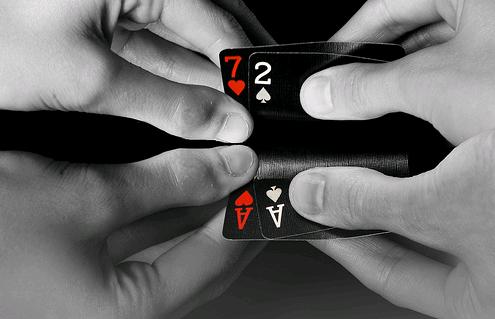
Reward in poker does now come without risk. The biggest factor that determines whether or not somebody becomes successful in the game is based on whether or not they can bluff effectively. Bluffing is the ultimate form of deception and is when a player bets on their hand even when they know it is weak. A player does this with the intention of scaring his opponent into folding, otherwise he’ll be forced to reveal just how weak his hand is, and likely lose the bet.
Why Bluff?
Poker is a very social game, whether played online or in a land based casino. Casual conversation between players is common between and during hands, and generally you can expect to play around twelve hands every hour. We have no control over the strength of the initial hand we are dealt, and if we were to only ever bet on our strong hands, we could be there a very long time. That is why it is necessary to bet even when we have a weak hand. If you can perfect your poker face, you stand a good chance of convincing your players to fold and maximise your profitability in the process.
Opponents
Bluffing is like lying in the sense that its effectiveness is dependent on who is on the receiving end. If somebody believes a bad or obvious lie, then it becomes a convincing lie. If you’re playing poker against a number of friends or people who are quite familiar with you, then they’re less likely to believe your bluff. It can be important to pick your targets when bluffing. One on one situations are the most ideal, but there may be times when bluffing a number of opponents at once may be necessary. As crazy as it may sound, more intelligent people are more likely to fall for a bluff, this is because their head is more invested in the game and they are assessing their opponents. Alternatively, less switched on players may not even pay attention to your game as they’re just focused on their own and may call you. Avoid bluffing these players as you’re likely to get found out a lot quicker.
Frequency
It wouldn’t really matter if you never bluffed at all (except for your profitability likelihood) but there is such a thing as bluffing too often. Eventually, it gets to a point where you become the boy who cried wolf if you bluff on every single hand, and your opponents will begin to recognise when you are bluffing and you will get called out for it. Similarly there will be times when people raise their own bet, which you may read as them calling your bluff, when in fact it could be because they genuinely have a strong hand that is worth betting on. The lesson, pick your battles.
Recognising Bluffs
Just as important as bluffing is being able to recognise when your opponents are doing so as well. Remember that everybody in poker is out for themselves and they want to beat you, just as badly as you want to beat them. This is where understanding the psychology of your opponent is crucial, as is being able to recognise their tells. This is evident in Casino Royale when Bond becomes reliant on Le Chiffre bleeding from the eye when bluffing. A good, strong poker player will have the ability to bluff convincingly and detect when others are bluffing.