

Written by :
Published on :
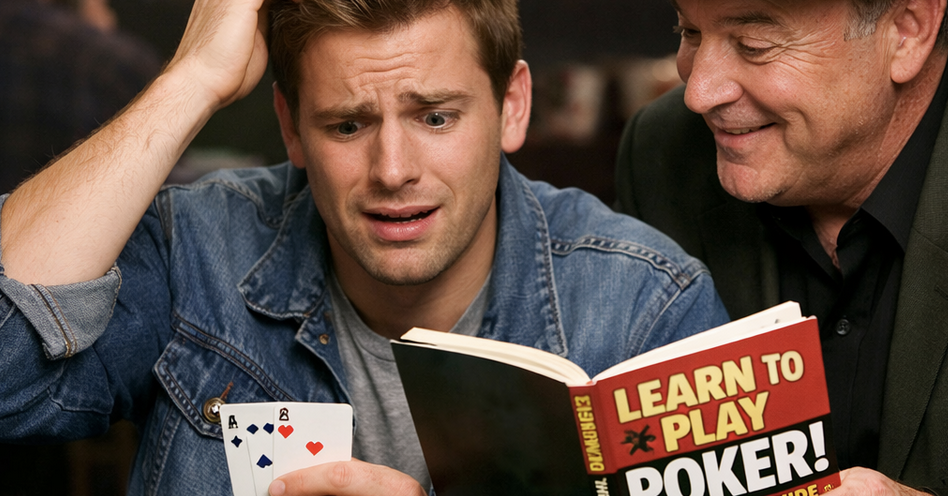
When I first got into poker, I had these visions of making a final table and winning millions of dollars. Given I was still in my twenties it felt like I could possibly make it to top tier if I put in enough work. But reality eventually set in and I realized maybe I wasn’t as good as I thought I was.
In this update I will be going over 5 mistakes every new poker player makes and its okay. The thing you should be focusing on is improving after every session you play and not making the same mistakes. Let’s get right into it.
Playing Too Many Hands
Okay, this is a big one. You don’t want to be the guy playing 10 5 suited raising from early position. This is rarely a good strategy especially if you are playing low to mid-stake games. Most new players tend to go to the lower games whether it’s playing live or online. What you will find at these stakes is being tight is the right approach.
You don’t need to get fancy when you first start playing. Just wait from premium hands in early position, meaning first or second to act, or fold. Keep it simple as a beginner.
Ignoring Position
This kind of ties into my first tip. If you are first or second to act at the table you should be opening with premium hands like AK, AQ, or mid pocket pairs. Everything else you just want to get rid of. If you are later to act and everyone folds around to you with only a couple of players left behind you then you can open a bit more with hands like 10 8 suited, or J 9 suited.
Over Valuing 1 Pair
I’ve been guilty of this myself, but sometimes you need to let your 1 pair go. Even if you have top pair and there are lots of draws possible like straights and flushes folding is sometimes the best play. They say in poker you make just as much money folding as you do winning. This concept never made sense to me until I got into spots where if I had just folded I would of saved a lot of money and had a winning session. Basically, if someone is raising you heavy on the turn or river and you have top pair, then sometimes accept that best play you can make is folding.
Playing Emotionally (Tilt)
This is a never-ending problem we all must deal with as poker players. Getting emotional after watching your pocket kings get cracked to pocket nines is a hard pill to swallow. In these moments it’s what you do next and how you handle it that matters most.
A lot of new players will simply let a loss like this spiral out of control to the point of possibly losing their entire bankroll. Don’t be that guy. Something I’ve found to work for myself in these moments is either quitting for the day or take a few hour break and coming back later. You must realize that you aren’t going to win every time you play, that’s just the nature of poker. But if you can get good at accepting this and realizing variance is going to happen you can start to control tilt in a responsible way. It takes work but it’s possible because I’ve done it. You can find some tips on this on Pokerstacked.com.
Poor Bankroll Management
This is a killer for any poker player, and I’ve learned the hard way many times over on this concept. For anyone new to the game, I think 30 buy ins for any level you’re currently playing is probably the sweet spot. So, if you are playing $100 games you want to have a starting roll of $3000.
Some people will argue with me about this and say you need way more than 30 buy ins but honestly, I think it’s fine. If you went up to 50-100 to me, it seems like overkill especially if you’re starting out at lower stake games. The important thing is that you are actually beating the level or stake your playing. The only way to find out is to put enough volume in to get results. Ideally you want to play around 30-50k hands to figure out how you’re doing. That sounds like a large sample size but in the bigger scheme of things it really isn’t.
Final Thoughts
Once you’ve played this game long enough you start to pick up on how much of it applies to real life. No one who just starts playing or starts into a new career is going to dominate out the gate. There are going to be setbacks, failures, and more failures. That’s just the natural order of things and poker is no different.
What I would really focus on initially is getting all the basics right and learning different concepts like GTO, ABC, and possibly reading as many poker books as possible. Because understanding strategy is one thing but being able to handle the emotions that also come with playing poker is a whole other thing.
Overtime you just want to be stacking skills on top of each other so that eventually you are the best one sitting at the table. You are levelheaded, locked in, and ready to play like its automatic. Being new to the game doesn’t mean you are going to be bad necessarily but accept that getting really good at this game takes time. The less mistakes you make initially the faster your progression will be overall.
Frequently Asked Questions
Is poker mostly luck or skill?
Poker involves both luck and skill, but skill plays a much larger role over the long run. In the short term, luck can affect individual hands or sessions because players cannot control the cards they are dealt. However, experienced players consistently make better decisions based on probabilities, position, and opponent behavior. Over time, those better decisions tend to produce more consistent winnings.
How long does it take to become good at poker?
The time it takes to become a solid poker player varies from person to person. Some players grasp the fundamentals within a few weeks, while others take several months to develop a deeper understanding of strategy. Regular practice, studying hand histories, and learning basic concepts like position and odds can greatly speed up the learning process.
What is the most important skill in poker?
One of the most important skills in poker is strong decision-making. Successful players evaluate the strength of their hand, the board texture, and their opponents’ likely holdings before taking action. Emotional discipline is also crucial because playing while frustrated or tilted often leads to poor decisions and unnecessary losses.
Should beginners start with online poker or live poker?
Both formats offer benefits for new players. Online poker generally features faster gameplay and lower stakes, making it easier to gain experience quickly. Live poker tends to move more slowly and allows players to observe physical behavior and table dynamics. Many beginners choose to start online before transitioning to live games.
Can beginners win at poker?
Yes, beginners can win, especially at lower stakes where many players make common mistakes. By focusing on solid fundamentals like playing strong starting hands, understanding position, and managing emotions, new players can steadily improve their results over time.
- Ace King, Gambling911.com