

Written by :
Published on :
Understanding Volatility in Funky Time: How to Adjust Your Strategy Based on Game Dynamics
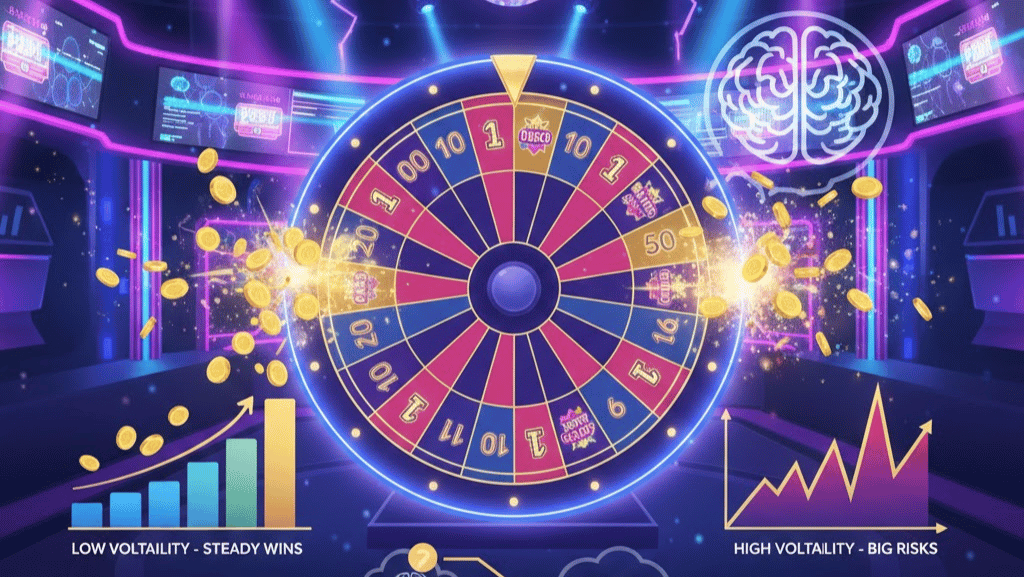
Funky Time operates on a massive 64-segment wheel that blends traditional betting sectors with interactive bonus rounds. Unlike simpler games where the outcome is a binary win or loss, this environment presents a spectrum of risk. Volatility here refers to the frequency and size of payouts. Some sessions might yield many small wins on the number 1, while others involve long stretches of silence followed by a sudden, high-multiplier bonus. Recognizing which phase the game is currently in helps in making informed decisions about bankroll management.
The Mechanics of the Funky Wheel
The distribution of segments on the wheel is the primary driver of volatility. Out of the 64 spots, the number 1 occupies 28 segments. This creates a high-frequency, low-reward foundation. When the wheel stops on these spots, the return is immediate but small. On the other hand, the letter segments and bonus games like Stayin’ Alive or Disco occupy far fewer slots. This setup means that a player focusing solely on bonuses is engaging with a high-volatility model. They are waiting for rare events that carry the potential for significant returns.
Statistical probability dictates that the number 1 will appear nearly 44 percent of the time. This constant activity can create a false sense of security. A player might see a Funky Time result appearing successfully for several rounds without realizing that their total balance is slowly eroding because the small wins do not always cover the total amount placed across multiple sectors. Understanding this balance is the first step toward a more disciplined approach.
Identifying High and Low Volatility Phases
Observing the game history often reveals patterns in how bonuses and numbers interact. While every spin is independent, the visual flow of the game can shift. A low-volatility phase is characterized by a steady stream of "1" results and occasional letters. A high-volatility phase appears when the wheel hits multiple bonuses in a short span or when multipliers from the Digi-wheel enhance the base payouts significantly.
To navigate these shifts, many participants categorize their bets based on the likelihood of the outcome. This helps in maintaining a balance between preserving the bankroll and participating in the larger "funky" events. Consider these three common ways players categorize their entry points:
- High-frequency segments. These are the number 1 spots that provide regular, small returns to keep the session active.
- Mid-range letters. The letters P, L, A, Y, F, U, N, K, and Y offer a 25:1 payout. They are less frequent than numbers but more common than bonuses.
- Bonus event triggers. The four unique bonus games represent the highest volatility, where the outcome is unpredictable but potentially large.
Adjusting Your Approach to the Multipliers
The central feature of Funky Time is the Disco multiplier, which can assign random values to specific segments before the wheel even stops. This adds a layer of "variable volatility." A standard win on a letter might pay 25:1, but if a 10x multiplier lands on that letter, the payout jumps to 250:1. This mechanism transforms a medium-risk bet into a high-reward scenario instantly.
When the game enters a "hot" streak where multipliers are hitting frequently, the dynamics change. The cost of missing a bonus round feels higher, which often leads players to spread their bets thinner. However, a structured approach involves looking at the probability of these multipliers actually converting into a win. It is often more effective to pick a specific area of the wheel and stick with it rather than chasing every multiplier that appears on the screen.
Strategic Betting and Bankroll Preservation
Balancing a 64-segment wheel requires monitoring the "hit rate." Betting on every bonus and letter provides wide coverage but results in a high cost per spin, requiring large multipliers just to break even. Conversely, focusing only on the number 1 is safe but misses the game's primary rewards.
Many experienced players use a "core and satellite" strategy, placing a larger, stable bet on the most frequent outcome to fund riskier bonus bets. This structure sustains the session while maintaining access to big events:
- The Foundation. A substantial bet on the number 1 designed to cover the total cost of other bets upon winning.
- The Letter Coverage. Targeting specific letters for 25:1 payouts to provide periodic balance boosts.
- The Bonus Guard. Minimum bets on bonus segments to ensure participation in interactive rounds without excessive risk.
The Impact of the Bar and Disco Bonuses
Bonus rounds vary in volatility. The Bar bonus is relatively stable, with multipliers revealed by a robot bartender that typically show moderate differences. In contrast, Disco and VIP Disco rounds are highly volatile; their success depends entirely on how long Mr. Funky remains on the floor, which can range from two steps to multiple 50x tiles.
Strategy here focuses on managing the cost of entry. With only three Disco segments on the wheel, you may face 20 or more spins without a bonus. To avoid depleting funds prematurely, it is essential to size bonus bets so they can be sustained over a long sequence.
Interpreting Game History and Data
The interface displays a history of recent spins which, while not predictive, illustrates the current game "climate." A dominance of the number 1 and letters suggests a low-volatility cycle, while frequent bonuses indicate a high-energy phase.
This data allows for tactical adjustments. For example, some might reduce bet sizes after several bonuses to wait for volatility to stabilize. Ultimately, Funky Time is a marathon. Maintaining a disciplined approach during long stretches of low payouts ensures you are still playing when a major multiplier finally hits.